

Every spring, the walled city of Lo Manthang comes alive with drums, long horns, and swirling silk robes. The Mustang Tiji Festival Trek combines one of the Himalaya’s most extraordinary cultural events with a journey through Upper Mustang’s red cliffs, ancient caves, and Tibetan-style villages. It is a trek for travelers who want more than scenery. It offers a rare chance to see a living Buddhist ritual in a region that stayed closed to outsiders until 1992.
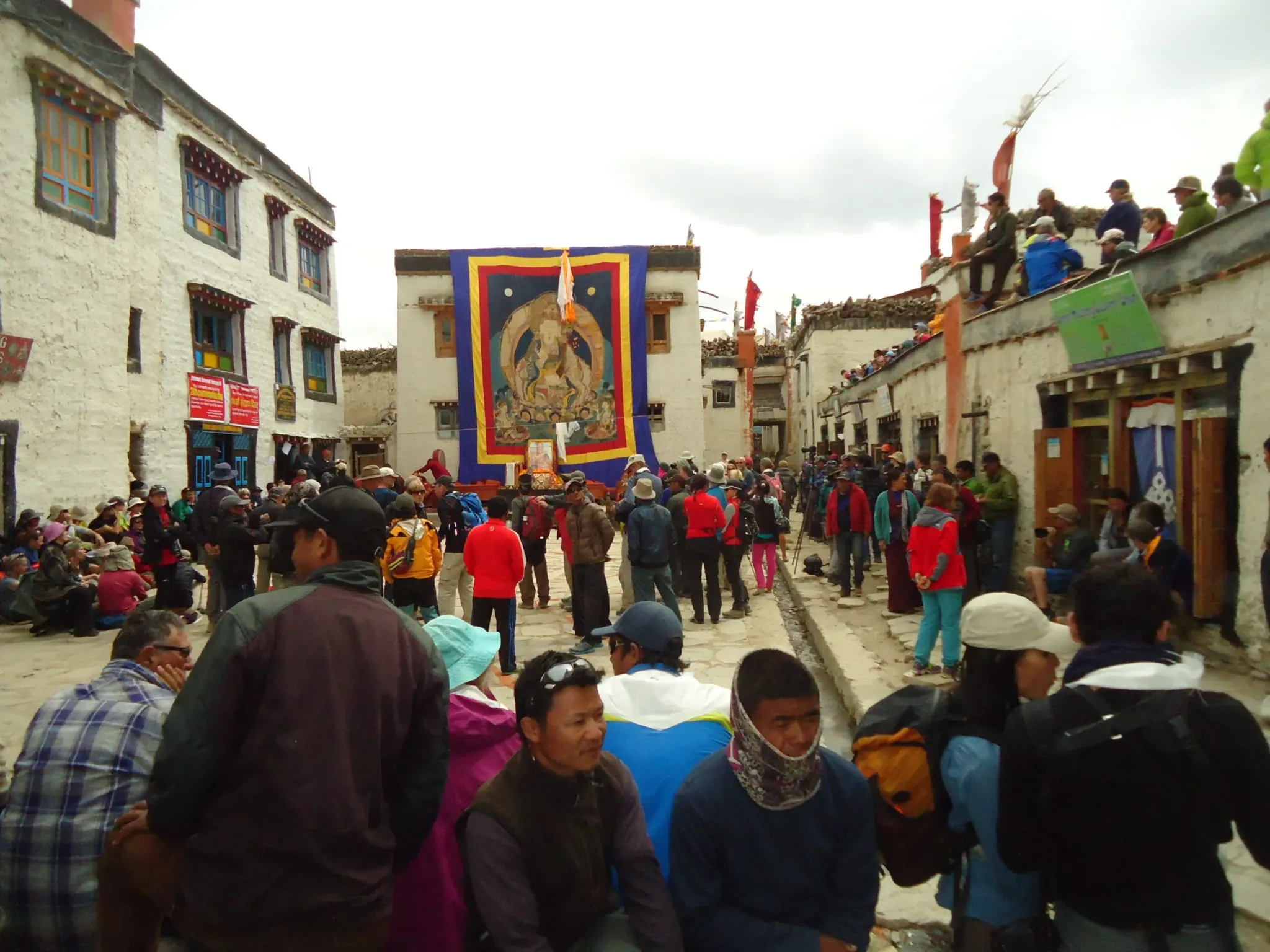
Overview of the Mustang Tiji Festival Trek
Upper Mustang, the old Kingdom of Lo, lies in the rain shadow of the Annapurna and Dhaulagiri ranges. Its landscape is a high desert of eroded canyons, wind-carved rock, and whitewashed monasteries, with a culture closely tied to Tibet. The trek follows the Kali Gandaki valley north from Jomsom through Kagbeni and Chele to Lo Manthang (3,840 m), the walled capital, where the festival takes place.
Most itineraries last 12 to 15 days, timed so that you arrive in Lo Manthang before the festival begins. The trek is moderate in difficulty, with a maximum altitude of about 4,000 m, but the timing and permits require careful planning.
What Is the Tiji Festival?
Tiji, pronounced “Teechi,” is a three-day Buddhist festival held each year in the courtyard of the old royal palace in Lo Manthang. Its name comes from the phrase “Tenpa Chirim,” meaning the prayer for world peace. The festival dramatizes a myth in which a deity named Dorje Jono battles his demon father, who threatens to destroy the kingdom by causing water shortages and suffering.
The story is told through masked dances performed by monks of the Choedhe monastery:
Day 1: Tsa Chham. The first day introduces the story. Monks in ornate costumes and painted masks enter the courtyard, and the ritual battle begins to take shape. The dances are slow, deliberate, and accompanied by chanting, cymbals, and the deep drone of long horns.
Day 2: Ngenpa Chham. The second day continues the story. The dances become more intense as the demon is subdued, and the monks portray the protective deities who defend the kingdom.
Day 3: Rhogar Chham. On the final day, the demon is symbolically defeated and the forces of good restore harmony. A ceremonial procession follows, and the crowd receives blessings for the coming year.
The festival also includes public rituals, prayers, and celebrations in the streets. Local families dress in their finest clothes, wearing turquoise and coral jewelry, and travel from surrounding villages to attend. It is a religious event first and a spectacle second, which is exactly what makes it so compelling.
Why Choose the Mustang Tiji Festival Trek?
Culture and landscape together. Few treks pair a major festival with such dramatic scenery. You walk through ochre canyons, past ancient cave dwellings, and beside long mani walls, then arrive in a medieval walled city just as the festival begins.
Authentic Tibetan Buddhist heritage. Mustang has preserved its language, dress, and rituals for centuries. Tiji lets you see these traditions in action rather than behind glass.
Rain-shadow climate. The festival usually takes place in May, when many other regions are approaching monsoon. Mustang stays dry, with clear skies and long days.
Small-scale tourism. Upper Mustang is a restricted area with limited visitor numbers, so the trek feels quiet and personal, even during the festival.
Excellent photography. The colorful costumes, dramatic masks, and desert backdrop offer superb photo opportunities, as long as you follow local rules about respect and distance.
Sample Itinerary
Here is a typical 13-day plan. Exact dates shift each year, so always confirm with your agency.
Day 1: Kathmandu to Pokhara. Travel by road or a short flight, and prepare for the mountain flight the next morning.
Day 2: Fly to Jomsom (2,720 m) and trek to Kagbeni (2,810 m). The flight passes between Dhaulagiri and Annapurna, one of the most scenic in the world. Kagbeni is the gateway to Upper Mustang, where permits are checked.
Day 3: Kagbeni to Chele (3,050 m). The trail follows the river, then climbs into more arid terrain with views of the Nilgiri range behind you.
Day 4: Chele to Syangboche (3,800 m). The route crosses high ridges and passes small villages, with wide views of canyons and colored cliffs.
Day 5: Syangboche to Ghami (3,520 m). Visit the famous mani wall, one of the longest in Nepal, and walk through barley fields and old settlements.
Day 6: Ghami to Tsarang (3,560 m). The trail crosses the Nyi La Pass and descends to Tsarang, with its striking fortress-style monastery and former royal palace.
Day 7: Tsarang to Lo Manthang (3,840 m). Cross the Lo La Pass and see the walled city appear on the plain. Explore the lanes, palace, and monasteries.
Days 8 to 9: Tiji Festival in Lo Manthang. Spend at least two days watching the dances and rituals. Arrive early to secure a good viewing spot in the courtyard, and take time to visit Thubchen, Jampa, and Chode monasteries.
Day 10: Optional excursion to Chhoser or Namgyal Gompa. Cave complexes and ridge monasteries add historical depth to the visit.
Day 11: Lo Manthang to Ghar Gompa and Yara. Follow the alternate return route through remote villages and wide landscapes.
Day 12: Return to Jomsom. Continue through Ghiling and Chhusang, with the Himalayan wall filling the skyline.
Day 13: Fly to Pokhara and return to Kathmandu.
When Is the Tiji Festival Held?
Tiji follows the Tibetan lunar calendar, so the dates change each year, but it usually falls in May. Because the exact days are announced locally, agencies typically confirm them several months in advance. Plan your trip around these dates, and expect lodges in Lo Manthang to be busy, so early booking is essential.
Difficulty and Fitness
The Mustang Tiji Festival Trek is rated moderate. Daily walks average five to seven hours, mostly on well-defined trails with some steep climbs and long descents. There are no technical sections, but the altitude and wind require good acclimatization. Wind in the Kali Gandaki valley rises in the late morning, so most trekkers start early and finish before the strongest gusts.
Basic fitness is enough for most healthy travelers. Begin training two to three months in advance with hiking, stair climbing, and cardio. Dry air can cause dehydration and sore throats, so drink plenty of water and carry lip balm and sunscreen.
Permits and Regulations
Upper Mustang is a restricted area, and the rules are strict:
-
An Upper Mustang restricted area permit, priced per person for the first ten days, with an additional daily fee afterward
-
An Annapurna Conservation Area Project (ACAP) permit
-
A registered trekking agency and a licensed guide are mandatory
-
A minimum group size of two trekkers is generally required
Fees and regulations change, so confirm the latest details with your agency well before departure.
Festival Etiquette
Tiji is a sacred event, and respectful behavior is part of the experience.
-
Dress modestly and remove hats when required.
-
Ask before photographing monks, elders, or ritual objects.
-
Do not enter the performance area or block the view of local families.
-
Keep voices low and switch phones to silent.
-
Follow local customs, such as walking clockwise around mani walls and stupas.
What to Pack
-
Layered clothing, including a warm down jacket for cold mornings and nights
-
Windproof jacket and trousers
-
Sturdy trekking boots and comfortable socks
-
Sun hat, sunglasses, and high-SPF sunscreen
-
Scarf or buff for dust and wind
-
Water bottle, purification tablets, and lip balm
-
Trekking poles, headlamp, and power bank
-
Personal medication and a basic first-aid kit
Responsible Travel Tips
Mustang’s ecosystem and culture are fragile. Carry out non-biodegradable waste, avoid single-use plastics, and choose locally owned lodges. Do not buy antiques or religious artifacts, and treat porters and guides fairly, with proper gear and reasonable loads. During the festival, give priority to local participants and remember that you are a guest at a community celebration.
Conclusion
The Mustang Tiji Festival Trek offers an experience that few journeys in the world can match. You walk through a desert landscape of red cliffs and ancient caves, enter a walled medieval capital, and watch monks perform a centuries-old ritual of protection and renewal. The mix of dramatic scenery, deep tradition, and quiet isolation makes this one of the most memorable cultural treks in Nepal.
If you want to see a side of the Himalaya that goes beyond peaks and passes, plan your trip around the Tiji dates, book early, prepare for wind and dry air, and approach the festival with respect. You will return with more than photographs. You will carry the memory of drums echoing across the courtyard of the last Himalayan kingdom.
