

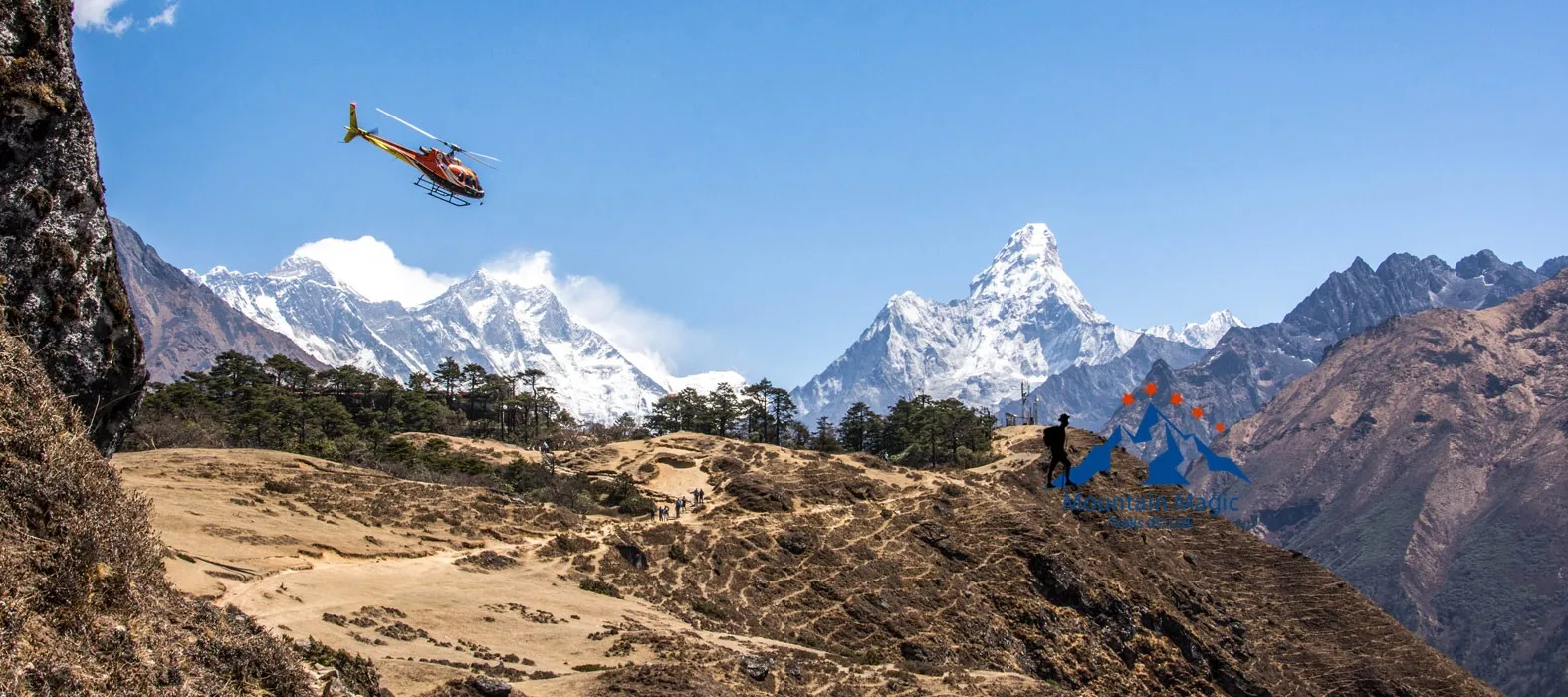
An Everest trip is not only about seeing the world’s highest mountain. It is also about the people, trails, villages, food, weather, and quiet moments that fill the days between Lukla and Base Camp.
The Everest Base Camp Trek With Helicopter Return gives travelers time to experience those details without requiring a long walk back after reaching the high Himalayas. The route includes major stops such as Namche Bazaar, Tengboche, Dingboche, Lobuche, Gorakshep, and Everest Base Camp before the return by helicopter. The listed itinerary is planned for 10 days. Mountain Magic Treks – Everest Base Camp Trek With Helicopter Return
The Small Details Make the Trek Special
Big mountain views are easy to remember. What people often remember years later, though, are the smaller things.
It might be a cup of hot tea after a cold morning walk. It might be the sound of a prayer wheel turning beside the trail. It could be meeting another trekker who has traveled from the other side of the world.
These moments give the journey its character.
Bridges Become Part of the Adventure
The trail through the Khumbu crosses several suspension bridges.
At first, walking across one may feel exciting. Later, you may get used to them. Still, standing above a fast-moving river with mountains rising around you is something most travelers do not experience at home.
The bridges also remind you how different mountain travel can be.
There are no highways connecting every village. The trail remains an important part of daily life in the region.
Tea Houses Give You a Look at Mountain Life
Tea houses are a major part of the Everest trekking experience.
They provide trekkers with a place to sleep, eat, warm up, and meet other people after a long day.
The rooms are usually simple. You are not going to the Himalayas for luxury hotels.
Dinner Becomes a Social Event
After several hours on the trail, food tastes different.
Trekkers often gather in common dining areas and share stories about the day’s walk. You may hear different languages around the same table.
Meals are generally simple and designed to give you energy for the next day.
Dal bhat, noodles, rice, soup, potatoes, and other familiar trekking foods can become regular parts of your meals.
That simple routine can become one of the most enjoyable parts of the trip.
The Mountains Change Your Normal Routine
At home, a short walk may barely register.
In the Everest region, walking becomes the main event of your day.
You wake up, eat breakfast, pack your things, and start walking. There is no need to think about traffic, meetings, or crowded streets.
Your Pace Becomes More Important Than Your Speed
A common mistake is trying to walk too quickly during the first few days.
That can leave you tired before the hardest sections arrive.
A better approach is to find a comfortable rhythm. Take smaller steps when needed. Drink water regularly. Stop briefly when your body asks for a break.
The goal is not to finish first.
The goal is to arrive with enough energy for tomorrow.
Namche Shows How Remote Communities Stay Connected
Namche Bazaar is one of the busiest settlements along the route.
You can find shops, cafes, bakeries, gear stores, and other services there. It can feel surprisingly lively considering its location high in the mountains.
The itinerary includes an acclimatization day in Namche, giving trekkers time to explore the area before continuing higher. Mountain Magic Treks itinerary details
Look Around Before Moving On
It is easy to treat Namche as just another overnight stop.
That would be a mistake.
Walk around the village. Look at the way homes are built into the slopes. Notice the goods being moved along the trail. Spend some time watching daily life instead of only checking the next day’s route.
The mountain communities are part of what makes this trek different from a normal hiking trip.
Tengboche Adds a Quiet Break
The trail toward Tengboche feels different again.
The village is known for its Buddhist monastery and mountain setting. Prayer flags add bright colors to the landscape, while the surrounding peaks create a huge backdrop.
Respect the Local Culture
Trekking through the Everest region also means passing places that have deep meaning for local communities.
Visitors should behave with respect around monasteries and religious sites. Keep noise low, follow local signs, and ask before taking photographs of people or ceremonies.
These small actions matter.
You are a guest in someone’s home region.
Dingboche Makes the Altitude Hard to Ignore
At Dingboche, the environment becomes more exposed.
The itinerary places the village at around 4,410 meters and includes another acclimatization day. Mountain Magic Treks – Dingboche itinerary
The air is thinner here, and even simple tasks can require more effort.
Listen to Your Body
Altitude affects people differently.
You might feel tired, develop a headache, lose your appetite, or have trouble sleeping. These signs should not be ignored.
Tell your guide if you feel unwell.
Trying to hide symptoms just to stay on schedule is a poor decision. A mountain itinerary can be changed. Your health is more important.
The Landscape Gets More Serious Near Lobuche
After Dingboche, the trail enters a much more barren environment.
Trees become scarce. Rocks cover much of the ground, and the surrounding peaks appear larger.
The route toward Lobuche also passes the Thukla memorial area, where memorials remember climbers who died in the Everest region. Mountain Magic Treks – Everest Base Camp itinerary
This can be a powerful reminder that the Himalayas are beautiful but demanding.
Gorakshep Feels Like a Turning Point
Gorakshep is one of the highest overnight stops on the route.
By this stage, the environment feels very different from the green trails near Lukla.
The air is cold and thin. The surrounding landscape is mostly rock, ice, and towering mountains.
Save Energy for the Final Push
From Gorakshep, trekkers make the journey toward Everest Base Camp.
This is not the time to waste energy trying to prove how strong you are.
Walk steadily. Take short breaks. Drink water. Keep your layers ready because temperatures can change quickly.
The final section deserves patience.
Everest Base Camp Is About More Than a Photograph
Reaching Everest Base Camp can feel strange.
You may take photographs, look at the Khumbu Icefall, and celebrate with your group. But the real meaning comes from remembering the days that came before.
You did not simply arrive by road.
You walked there.
Take a Moment Before Leaving
Do not rush away after getting your photographs.
Look back toward the trail. Think about where you started and how much the landscape has changed.
The base camp itself is important, but the journey gives it meaning.
Kala Patthar Offers a Different Perspective
The itinerary also includes an early morning climb toward Kala Patthar, which reaches about 5,545 meters. From this viewpoint, trekkers can get broad views of Everest and nearby peaks. Mountain Magic Treks – Kala Patthar details
Bring Your Camera, But Do Not Hide Behind It
A camera can capture the mountains.
It cannot capture the cold air, the silence, or how hard it felt to climb there.
Take photographs, but also spend a few minutes simply looking.
Some moments are better experienced before they are posted online.
The Helicopter Return Changes the Final Experience
The biggest difference in this itinerary comes after the trekking section.
Instead of walking back through the same villages, the helicopter takes you away from the high mountains.
That makes the Everest Base Camp Trek With Helicopter Return especially appealing to travelers who want to reduce the number of return trekking days.
Watch the Route Disappear Below You
From the trail, a mountain valley can look enormous.
From a helicopter, it becomes part of a much larger picture.
You can see ridges, glaciers, villages, rivers, and trails from above. Places that took hours to reach on foot may pass beneath you in minutes.
It gives you a final chance to understand the scale of the region.
Weather Still Has the Final Say
A helicopter cannot operate simply because it is written on a schedule.
Mountain weather can change quickly. Wind, cloud cover, visibility, and other flight conditions can affect operations.
That means travelers should keep some flexibility around the return flight.
A delayed flight is frustrating.
A flight operated in unsafe conditions would be far worse.
Who Will Enjoy This Type of Everest Trip?
The Everest Base Camp Trek With Helicopter Return can be a strong option for travelers who value time but still want to experience the trail properly.
It may work well for:
-
Busy professionals
-
Travelers with limited vacation time
-
People who do not want to repeat the return trail
-
Couples and small groups
-
Trekkers who want both ground and aerial views
It is still a serious high-altitude trek, though. The helicopter only changes the return portion.
Conclusion
The Everest Base Camp Trek With Helicopter Return is not memorable only because of Everest.
It is memorable because of everything that happens around the mountain.
The suspension bridges. The tea houses. The Sherpa villages. The Buddhist monastery at Tengboche. The changing landscape. The quiet mornings at high altitude. The conversations with fellow trekkers.
Then comes the helicopter ride, offering one final look at the trail from above.
You arrive as a visitor looking for Everest.
You leave having experienced an entire mountain region.
FAQs
How many days is the trip?
The listed itinerary is designed as a 10-day journey, including the trek and helicopter return. Mountain Magic Treks trip itinerary
What kind of accommodation is used?
The trip uses hotel accommodation in Kathmandu and tea house or lodge accommodation during the trekking sections.
Is food available throughout the trek?
Meals are available at the tea houses and lodges along the route. The exact meals included depend on the package and itinerary.
What should I do if I feel sick at high altitude?
Tell your guide immediately. Do not hide symptoms or continue climbing simply because you want to stay on schedule.
Does the helicopter remove the difficult part of the trek?
No. You still need to walk to Everest Base Camp and handle high-altitude conditions. The helicopter mainly reduces the walking required on the return journey.
