

 For many travelers, Everest begins as an idea.
You see a photograph of the mountain, read about the famous trail, and imagine what it would feel like to stand in the high Himalayas. But the real experience is very different from looking at a picture.
The Everest Base Camp Trek With Helicopter Return turns that dream into a journey that combines walking, mountain culture, changing landscapes, and an aerial return.
You do not simply arrive at Everest. You slowly move toward it and watch the world change around you.
The Journey Starts With Curiosity
Before the mountains become enormous, the trail gives you time to settle into the experience.
The lower sections can feel surprisingly peaceful. Green hills, trees, rivers, and small settlements create a softer introduction to the Himalayas.
First Impressions Can Be Misleading
At the beginning, you may wonder how the trail will become a high-altitude adventure.
Then the landscape starts changing.
The path climbs, the valleys become deeper, and distant peaks begin appearing between the hills.
The transformation happens gradually, which makes it more impressive.
Walking Lets You Notice What Flights Cannot
A flight can take you across a huge distance in minutes.
Walking is different.
You hear the river below the trail. You notice small stones under your boots. You pass homes and mountain lodges. You stop to catch your breath while a giant peak rises in the distance.
The Slow Route Has Its Own Reward
You become part of the landscape for a while.
Instead of watching the Himalayas through a window, you move through them step by step.
That creates a stronger sense of connection with the place.
The Trail Is Full of Unexpected Details
Not every memorable moment happens at a famous viewpoint.
Sometimes it is a row of colorful flags moving above a bridge.
Sometimes it is the sound of a bell from a passing animal.
Sometimes it is a quiet mountain village just after sunrise.
Keep Your Attention on the Ordinary
Travelers often search for the perfect photograph.
But the best memories may come from moments that were never planned.
A warm bowl of food after a long climb. A short conversation with another trekker. A peaceful rest beside the trail.
These details make the journey feel real.
Local Culture Is Part of the Route
The Everest region is home to communities with deep ties to the mountains.
As you walk through villages, you see signs of local Buddhist traditions and mountain life.
Prayer wheels, mani stones, monasteries, and prayer flags appear along different parts of the route.
Be a Guest, Not Just a Tourist
Respect is important when visiting cultural and religious places.
Follow local instructions, ask before taking close photographs of people, and avoid treating religious objects as decorations.
Learning a little about the culture can also make the experience much richer.
Every Day Has a Different Challenge
Some days may involve long climbs.
Others may have more gradual sections but still leave you tired because of the altitude.
A trek does not have to feel equally difficult every day.
Expect Your Energy to Change
You might feel strong one morning and slow the next.
That is not necessarily a problem.
Sleep, food, weather, altitude, and the previous day’s effort can all affect how you feel.
Listen to your body rather than expecting yourself to perform at the same level every day.
Higher Ground Brings a Different World
As the trail climbs, vegetation becomes thinner.
The landscape begins to look more open and severe. Rocks become more common, while trees gradually disappear.
The mountains also seem closer.
The Colors Begin to Change
Lower sections may have strong greens and natural colors.
Higher areas often have shades of gray, brown, white, and blue.
Snow, rock, ice, and sky dominate the view.
The change is gradual, but by the time you reach the higher valleys, the landscape feels completely different from where you started.
The Last Stretch Demands Patience
The final approach to Everest Base Camp can be tiring.
At high elevation, even a modest climb can require more effort than expected.
The cold and exposed terrain can add another challenge.
Do Not Chase the Finish Line
It is tempting to think only about reaching Base Camp.
But rushing through the final section can make the experience less enjoyable.
Take steady steps. Stop when needed. Drink water and follow your guide’s advice.
The destination is important, but there is no reason to make the final hours unnecessarily difficult.
Standing at Base Camp Changes the Meaning of Everest
Photographs cannot fully prepare you for the scale of the mountains around Base Camp.
You see the rocky terrain, glacier, and enormous peaks nearby.
More importantly, you know that you walked there.
The Achievement Is Personal
Two people can reach the same place and feel completely different emotions.
One may feel proud after months of preparation. Another may feel surprised that they actually made it.
There is no correct reaction.
Take the moment for yourself.
The Return Adds a Second Adventure
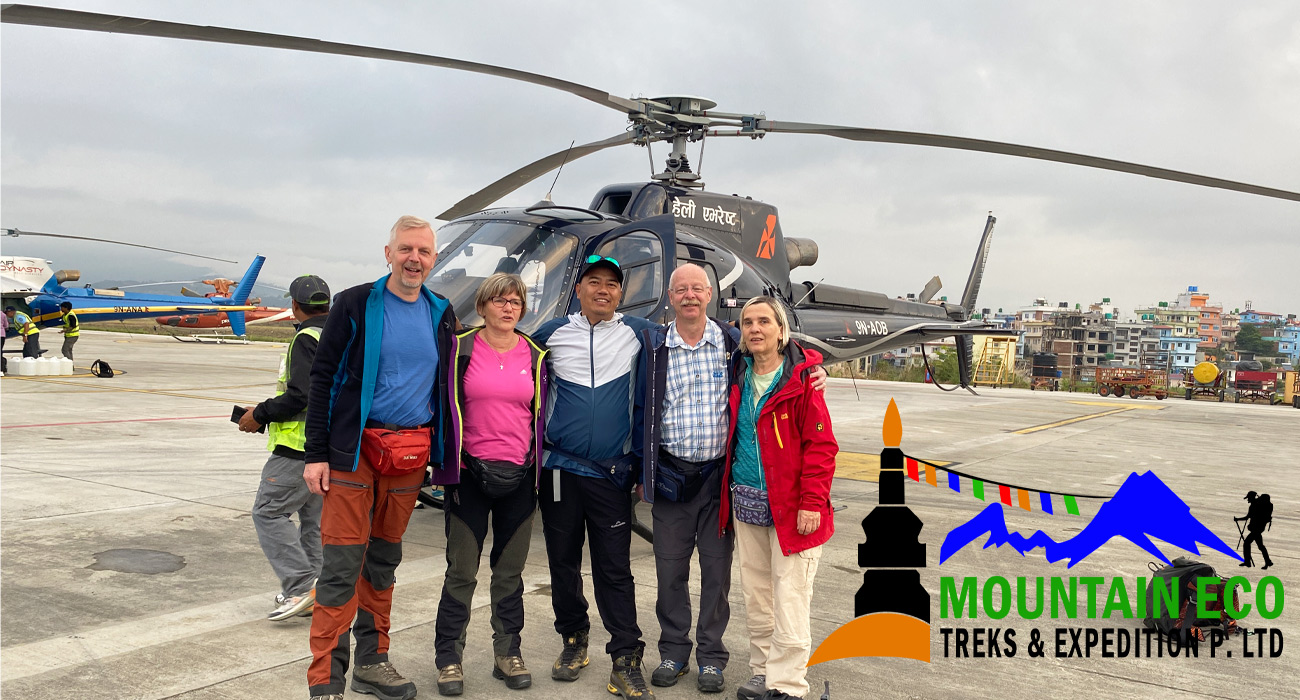
After reaching Base Camp, the Everest Base Camp Trek With Helicopter Return takes a different path.
Instead of spending several more days walking downhill, you can return by helicopter when weather and flight conditions permit.
This changes the final part of the trip completely.
From Footsteps to Flight
For days, you have been focused on the trail directly in front of you.
Now the entire landscape opens below.
The valleys, villages, rivers, and mountain slopes that seemed separate while walking become one enormous scene.
It can be one of the most surprising transitions of the trip.
The Helicopter Shows How Far You Really Walked
Aerial views can make distance easier to understand.
You may recognize places you passed several days earlier.
A trail that once seemed endless now looks like a narrow line across the mountains.
Look for Familiar Landmarks
Watch for villages, rivers, ridges, and other features you remember.
Seeing them from above can create a strange but satisfying feeling.
You realize that the landscape you crossed on foot is much larger than it felt from the trail.
Weather Still Has the Final Say
A helicopter return depends on safe flying conditions.
Mountain weather can change quickly, and clouds or poor visibility may affect operations.
This is something every traveler should understand before the trip.
Leave Space in Your Plans
Do not build your entire travel schedule around a flight operating at the exact expected time.
Extra time is useful if weather causes a delay.
A flexible plan allows you to enjoy the journey without constantly worrying about the clock.
Why This Combination Works
The Everest Base Camp Trek With Helicopter Return combines two very different travel experiences.
Walking gives you time.
You experience the mountains slowly, interact with the region, and feel the effort involved in reaching Base Camp.
The helicopter gives you perspective.
You see the same landscape quickly and from a much wider angle.
Neither part replaces the other.
A Dream That Becomes a Story
The Everest Base Camp Trek With Helicopter Return is ultimately about more than reaching a famous place.
It is about watching a familiar idea become real through days of walking. It is about mountain villages, changing weather, quiet trails, tired legs, cold mornings, and the first sight of the high peaks.
Then comes the helicopter ride, giving you one final chance to look back at the route from above.
That is what makes the experience memorable. You do not just see Everest. You travel through the world around it, experience the journey at ground level, and leave with a wider view of the mountains.
Frequently Asked Questions
How long does the walking portion take?
The exact length depends on the itinerary and conditions, but the trek normally involves several days of walking and acclimatization before reaching Base Camp.
Is the trail suitable for people who have never trekked before?
Beginners can take part with proper preparation and guidance. Physical fitness, patience, and careful acclimatization are important.
What should I do if I feel tired during the trek?
Slow down, take a suitable break, eat and drink regularly, and tell your guide if you feel unwell.
Can I rely on the helicopter to operate at a fixed time?
No. Helicopter operations depend on weather and safety conditions, so some flexibility is necessary.
What is the biggest difference between walking back and flying back?
Walking gives you more time in the mountains but requires several additional days. Flying provides a much faster return and gives you a broad aerial view of the region.
